
What begins as a weekend interest in keeping a personal vehicle clean can gradually develop into a small automotive detailing business. However, working on customers’ vehicles introduces responsibilities beyond purchasing polishing machines and cleaning products. Water management, electrical safety, equipment storage, lighting, and local business requirements all influence whether a residential garage is suitable.
Homeowners considering garage epoxy flooring should evaluate how detailing activities affect the existing concrete. Washing, polishing, and interior cleaning involve different conditions, and not every task belongs in the same area. Planning the workspace around actual activities helps avoid unnecessary alterations and establishes clearer operating procedures.
Check Whether Commercial Use Is Permitted
Before accepting customers, homeowners should determine whether operating an automotive detailing business from their property is allowed. Local zoning requirements, business licensing, environmental rules, and homeowners association restrictions may affect the proposed activities. A garage suitable for personal vehicle maintenance is not automatically approved for commercial services.
Customer parking, noise, working hours, and chemical storage can introduce additional considerations. Business insurance may also differ from ordinary homeowners coverage. Confirming these requirements before purchasing expensive equipment can prevent complications after operations begin.
Separate Washing From Dry Finishing
Vehicle detailing includes several stages that benefit from different working conditions. Washing introduces water and cleaning products, while polishing and protective finish application generally require greater control over dust and surface contamination. A dedicated washing area should have appropriate water management and comply with applicable wastewater requirements.
In Phoenix, outdoor washing arrangements also need to account for local runoff restrictions and environmental conditions. Polishing areas should remain protected from unnecessary dust, especially when vehicle paint is being prepared for finishing products. Separating these activities can make the workflow easier to manage without assuming every residential garage has suitable drainage.
Lighting Reveals Surface Imperfections
Automotive detailing requires careful inspection of vehicle paint, trim, and interior materials. Poor lighting can make scratches, residue, and uneven polishing results difficult to identify. A combination of general lighting and suitable inspection lights may help workers examine different surfaces.
Light positioning matters because reflections can reveal defects that are not visible from every angle. Electrical equipment should be appropriate for the environment, particularly where moisture or cleaning products may be present. A practical lighting arrangement supports detailed work without relying exclusively on decorative ceiling fixtures.
Flooring Should Match the Work Performed
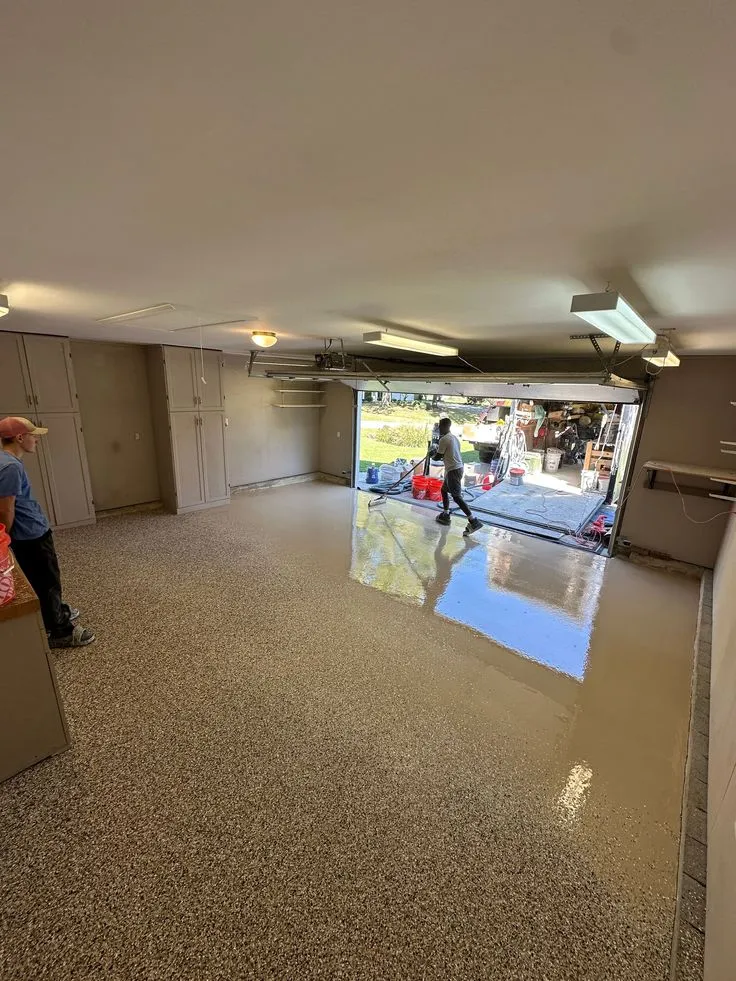
Detailing activities can expose concrete to water, cleaning products, equipment movement, and repeated vehicle traffic. The selected surface should be evaluated according to these conditions. Some property owners also consider polished concrete for suitable workspaces, but its characteristics differ from those of resin-based coatings. Neither finish should be assumed resistant to every chemical used in automotive detailing.
Professional assessment should address substrate condition, cleaning procedures, drainage, and relevant product specifications before installation. A decorative surface cannot independently correct wastewater problems or make an unsuitable garage safe for commercial operations.
Equipment Storage Supports Efficient Work
Detailing equipment can occupy considerable space, particularly when a business uses several polishing machines, vacuums, brushes, and cleaning products.
A clear storage arrangement helps prevent equipment from obstructing vehicle access.
Useful considerations include:
- Polishing tools: Store equipment securely between uses.
- Cleaning products: Follow manufacturer storage instructions.
- Electrical cables: Keep walking routes free from loose leads.
- Microfiber materials: Separate clean supplies from used items.
- Vehicle clearance: Preserve suitable access around parked cars.
Storage systems should be selected according to their load limits and the available garage space.
Phoenix Weather Influences Scheduling
Phoenix experiences intense summer heat, which can affect working conditions inside an unconditioned garage. High temperatures may also influence the handling requirements of certain detailing products. Manufacturers may specify suitable temperature ranges for application and storage. Homeowners should monitor actual conditions rather than assuming that shade alone provides an appropriate environment.
Ventilation and cooling arrangements may require professional evaluation, especially when products release potentially hazardous vapors. Dust storms and windy conditions can also affect outdoor washing and finishing activities, making weather awareness important when scheduling work.
Plan for Business Growth
A garage that accommodates occasional weekend appointments may become less practical as customer demand increases. More vehicles, equipment, and supplies can place pressure on available storage and parking space. Business owners should review whether their arrangements remain suitable as operations develop.
Expanding into additional services may introduce new safety, environmental, or licensing requirements. At some point, dedicated commercial premises may offer a more appropriate environment than continued operation from a residential garage.
Conclusion
A home detailing business requires more than attractive flooring and professional cleaning equipment. Permitted business use, wastewater management, lighting, product storage, and working conditions all influence whether a residential garage is suitable. Different detailing activities may also require separate areas and safety procedures. Homeowners exploring flooring options through dialedinepoxy.com can consider these factors before planning permanent improvements. By understanding the practical requirements of automotive detailing and preparing for changing business needs, operators can make informed decisions without overlooking environmental, safety, or property-use responsibilities.

